Article: Sika Deer Hunting in Ireland
Sika Deer Hunting in Ireland
written by Stina Didriksen @skadi_outdoors from Norway
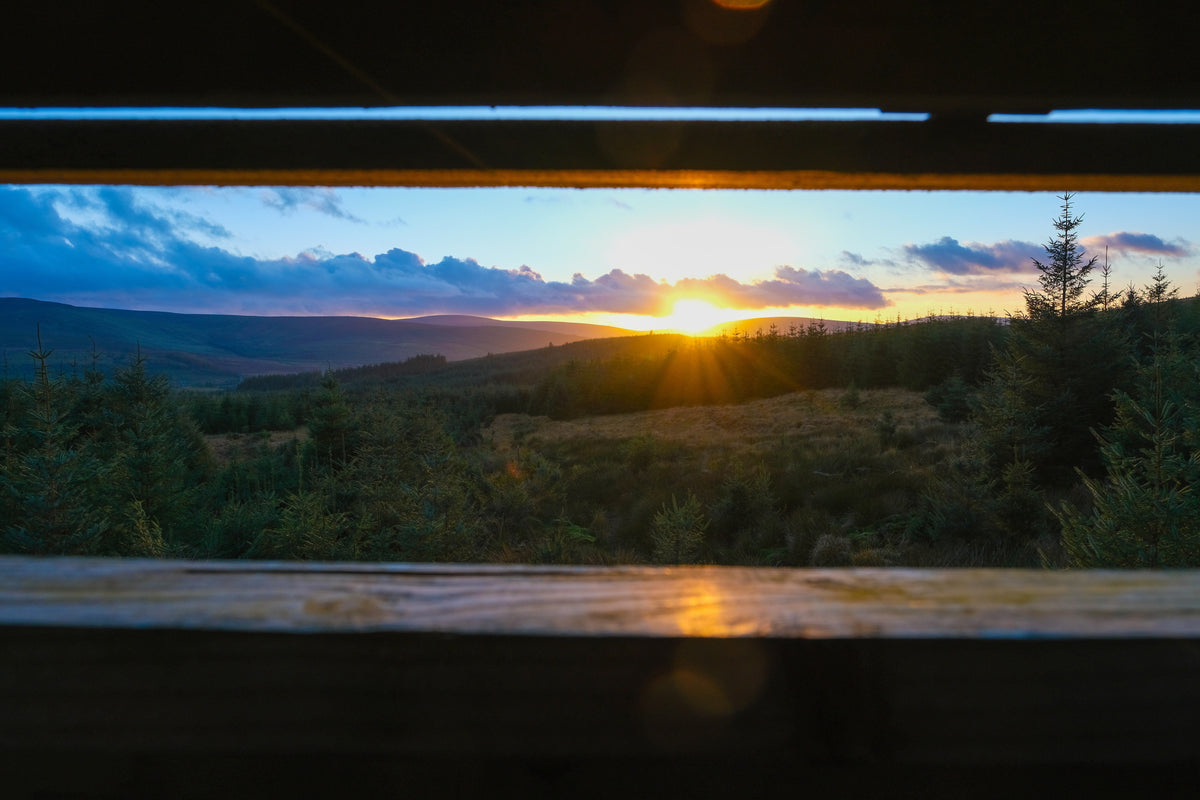
By late autumn, the bright purple heather of Wicklow has faded to pale shades of beige. Open moorland, bog grass and scrub stretch between stands of evergreen Sitka spruce and yellowing larch. Inside the older spruce forests, the trees grow tall and close together, shutting out much of the light, while an almost luminous layer of green moss covers the ground and creeps up the trunks. It is a beautiful and slightly mysterious landscape, like something from an old folktale.
Between the mature forests are clear-felled areas, open bogs and younger plantations. The grass can grow high enough to conceal a small deer completely, while the dark forests provide endless places to disappear. It is one of the most beautiful landscapes I have ever hunted in and perfect country for one of the most elusive deer I have ever pursued.
Wicklow is famous for its sika deer, and both the numbers and quality of the animals reflect how well suited they are to this landscape. Sika are relatively small deer, rarely standing much more than a metre at the shoulder, but they are incredibly alert and notoriously difficult to stalk. Their hearing and sense of smell mean that getting close requires patience, a careful approach and a little luck.
It is easy to understand why they are sometimes called “the black ghost.” In these dark forests, a sika stag can appear for a few seconds and vanish just as quickly. I had wanted to experience this kind of hunting for years.
My First Sika Stag
On our first evening, we set out on foot along a track bordered by spruce and small clearings. Within minutes we spot a hind accompanied by a young stag, but she has already detected us. One sharp warning whistle is enough, and both disappear into the cover.
We continue to a high seat overlooking an area that was clear-felled several years ago. Young trees are beginning to reclaim the open ground, while mature spruce surrounds it like a dark wall. A hind soon emerges and begins feeding nearby. Deeper inside the forest, however, we can hear something else. It could be antlers against a tree or a deer scraping at the ground, but the dense spruce muffles the sound and makes it impossible to know for certain.
Shooting light is beginning to fade when my guide suddenly notices movement near the edge of the clear-fell. “Big sika stag,” he whispers, passing me the rifle and indicating where the animal has appeared.
The stag is already moving towards us, using the scattered young trees for cover. At 35 metres, he stops. Between the branches I can make out a tall, almost coal-black figure looking directly towards us. His neck is thick and his face gives him a powerful, almost confrontational appearance. “Can you take the shot?” my guide asks quietly.
The rifle is steady and the opportunity is clear. I settle the crosshairs low on the broad neck and squeeze the trigger. At the shot, his antlers drop immediately into the vegetation and everything becomes quiet again.
We wait before climbing down, with my guide’s tracking dog already eager beneath the high seat. She quickly picks up the scent and leads us towards the stag. The vegetation is high, but two pale antler tips reveal where he lies.
Only then does the tension begin to disappear. In front of me is my first sika stag: an old eight-pointer with scars on his ears and signs of a life that has included more than a few battles. It is an incredible start to the trip, partly down to hunting luck but also to careful deer management and a guide who knows these forests and their deer intimately. He tells me the stag was an old animal, probably beginning to decline. Whatever happens during the rest of the trip already feels like a bonus.
 Stalking Through the Dark Forest
The following morning begins before first light. We walk between towering Sitka spruce while the forest is still wrapped in deep green shadows. Somewhere ahead, a hind gives her warning whistle and disappears. The dog follows silently as we move slowly along the trail, concentrating on every footstep. In a place this quiet, even breaking a single twig feels loud.
Near the end of the trail, my guide stops abruptly. A stag is standing 98 metres away at the edge of a clearing. The wind is in our favour, and he has not worked out where we are. When he starts moving again, I follow him through the scope. My guide whistles as the stag reaches the clearing, making him stop long enough for me to take the shot.
The stag turns and races down the steep hillside before disappearing among the spruce. We wait before following with the dog on the leash. At the place where the stag had been standing, she immediately finds the track and pulls us down through the forest. Around 50 metres farther on, she raises her head and her tail begins to move. Beneath the towering trees lies a black shape against the bright green moss.
He is a beautiful six-point stag, younger than the animal from the evening before. Seeing him lying beneath the enormous spruce makes the nickname “black ghost” seem even more appropriate. These deer blend into their surroundings in an extraordinary way, and experiencing them at such close quarters only adds to my respect for them.
We make our way down through the steep forest, passing small streams cutting through the peat and larches dropping golden needles onto the moss. The colours, the silence and the scale of the trees make the walk out almost as memorable as the hunt itself.
Sometimes the Stalk Is Enough
Later that day, rain begins to fall as we move into another part of the forest. We pass an old rutting area and soon encounter a young spike stag. I am ready on the shooting sticks, but spruce branches keep him covered and he disappears before offering an opportunity.
As he leaves, a hind rises nearby. She is also partially hidden and, unaware of us, eventually lies down again. We begin working our way towards her as quietly as possible. The wet ground helps soften our footsteps, but every movement still feels amplified by the silence. I become conscious of my breathing and even my heartbeat.
We are almost at the top of the clearing when the hind suddenly stands. We drop behind the vegetation. She is only ten metres away. I raise the rifle slowly, and for a fraction of a second our eyes meet before she disappears.
There is no shot, but I do not feel disappointed. Getting that close to a completely wild sika is an experience in itself, and this stalk immediately becomes one of my favourite memories from the trip. Hunting is not always about pulling the trigger. Sometimes getting close, reading the animal and becoming completely absorbed in the landscape is enough.
Another Black Ghost
That evening, we move to another area of younger spruce and clear-felled ground. From a high position we can glass large parts of the landscape before eventually heading down to our final stand.
I am watching the field when my guide suddenly whispers, “Stag.” A black figure has emerged in the corner and is moving quickly towards us. A large oak blocks our view, so we quietly change position. The stag stops at around 50 metres, and with most of the leaves already gone, I find a clear opening between the branches. “If you can take him, take the shot,” my guide whispers.
The stag leaps at the shot and runs across the field. At around 100 metres he begins to falter before finally coming to rest at the edge. He is a small six-pointer, his pale antlers standing out sharply against his coal-black coat. Once again, I am struck by just how beautiful these deer are and how perfectly adapted they seem to the forests they inhabit.
By now, the trip has already exceeded everything I had hoped for. But we still have one final day.

One Last Evening in Wicklow
For the final evening, we return to a high seat overlooking a huge clear-felled area surrounded by dense Sitka forest and open bog. The dog settles beneath us, and almost immediately deer begin to appear. A hind and calf cross below us, another hind moves through the far side, and a third feeds almost completely hidden in the tall grass.
Before long, a young hind runs into the clearing with a spike stag close behind her. She is in season, and he follows persistently until both disappear at the bottom of the clearing. A few minutes later, they reappear on the same route. My guide predicts where they will cross and tells me to be ready.
I follow the stag as he moves behind the hind. At 140 metres, my guide whistles and the stag stops, lifting his head towards us. The bog grass hides part of his body, but there is enough of an opening. I steady my breathing and take the shot. The hind disappears into the forest, calling for the stag, while he remains behind.
As evening settles over Wicklow, the calls of sika stags begin to carry from the surrounding forests. Their strange, high-pitched rutting whistles echo between the trees. Sitting there as the light fades, surrounded by dark spruce and listening to sika calling from somewhere inside the forest, becomes one of the defining moments of the trip.
Just before we finish for the evening, a large dog fox also appears in the clearing. He moves cleverly through the tall bog grass, making a shot difficult until, eventually, he gives me an opportunity.

A Hunting Experience I Will Never Forget
Four days of stalking have resulted in four sika deer, including the old eight-point stag from the first evening. We have seen many more, and several have been in the scope without ever presenting the right opportunity. Taking four animals in such a short trip feels extraordinary. Luck has certainly played a part, but so have careful planning, years of responsible deer management and excellent guiding from someone who understands both the ground and the animals that live here.
More than anything, however, I will remember the experience of hunting this landscape. Moving quietly through dark spruce forests, crossing open bogs and listening for the warning whistle of a deer you cannot yet see brings you incredibly close to your surroundings. Wicklow is one of the most beautiful places I have hunted, and stalking here allows you to experience its wild character in a very particular way.
The sika deer has earned a special place in my hunting memories. Alert, elusive and almost perfectly concealed in the dark forests, these animals truly are shadows among the trees. I leave Wicklow deeply grateful for the hunt, the animals and the people who made the experience possible. It is a memory I will carry with me for the rest of my life and I already know I want to return.